Source waterproof aluminum foil mask bag for Face Mask, Food, and Industrial Packaging
Compare 30 verified listings for waterproof aluminum foil mask bag options tailored for face mask, food, and industrial packaging applications. Buyers can evaluate customization, material layers like PET/PE or BOPP+VMPET+PE, and MOQs ranging from 20,000 to 30,000 units.
Key considerations
Products List







Comprehensive Sourcing Guide
Strategic Sourcing Guide for Waterproof Aluminum Foil Mask Bags
Understanding the Technical Architecture of Composite Packaging
When sourcing waterproof aluminum foil mask bags, buyers must first recognize that the product is rarely a single-layer material but rather a sophisticated composite structure designed to meet rigorous barrier requirements. The core material composition typically involves a multi-layer laminate where Aluminum Foil serves as the primary barrier layer, sandwiched between other polymers to ensure structural integrity and sealability. Based on observed industry specifications, common material configurations include combinations such as PET/PE or BOPP+VMPET+PE, though the specific inclusion of Aluminum Foil is critical for the "waterproof" and "moisture-proof" attributes demanded by mask manufacturers.
The functional architecture of these bags relies on the synergy between the layers. The outer layer, often PET or BOPP, provides the necessary surface for high-quality printing and abrasion resistance. The middle layer, which may be Aluminum Foil or VMPET (Vacuum Metallized PET), acts as the absolute barrier against moisture, oxygen, and light, ensuring the hygiene of the mask inside remains uncompromised during storage and transit. The inner layer, typically PE (Polyethylene), facilitates the heat-sealing process, creating a hermetic seal that prevents any ingress of water or contaminants. This composite packaging bag design is essential for maintaining the "leakproof" and "fragrance keeping" features often cited in product descriptions, ensuring that the mask remains sterile and dry until the point of use.
The physical dimensions of these bags are rarely standardized, as the sourcing requirement often dictates a "Customized" size and thickness to fit specific mask models. The "Single package size" can vary, but typical specifications for individual units might range around 15x15x0.1 cm, while the overall bag dimensions are tailored to the "Custom based on your requirement" logic. The "Bag Style" frequently observed is the "Stand up Flat Bottom Bag" or "Doypack," which offers superior shelf presence and stability. However, for bulk mask packaging, "Flat Bottom Bag" or simple "Upright Bag" styles are also common, depending on whether the bag needs to stand independently or be packed in cartons. The "Sealing & Handle" method is predominantly "Heat Seal," which is the industry standard for ensuring the integrity of the aluminum foil barrier without compromising the seal strength.
Compliance Verification and Certification Standards
In the medical and personal protective equipment (PPE) sector, the verification of compliance is not merely a formality but a critical component of the procurement strategy. Buyers must rigorously evaluate the supplier's ability to provide valid documentation for certifications that validate the safety and quality of the packaging materials. The observed market data indicates that suppliers often claim compliance with ISO9001 and FDA standards. These certifications are vital because they demonstrate that the manufacturing facility adheres to international quality management systems and that the materials used are safe for food and medical contact applications.
When evaluating a supplier, the buyer should request current, verifiable copies of these certificates rather than relying on marketing claims. The presence of "ISO9001" suggests a commitment to consistent quality control processes, while "FDA" compliance indicates that the materials meet specific US regulatory standards for indirect food additives, which is often extrapolated to medical packaging safety. Additionally, some suppliers may offer "BSCI" (Business Social Compliance Initiative) certification, which addresses social responsibility and labor practices within the supply chain. While "ISO 4593" and "ASTM E96" are mentioned in broader industry contexts regarding packaging standards, buyers should verify if these specific standards are actively applied to the product batch in question, as the provided facts do not explicitly confirm their universal application to every listed item.
The "Certification" field often lists "ISO9001 FDA" or "BSCI/ISO9001,etc." The use of "etc." implies that there may be additional, unspecified certifications depending on the specific product model or the target market. For a "Waterproof aluminum foil mask bag," the buyer must ensure that the specific aluminum foil and adhesive layers used in the composite structure are compliant with the relevant medical device packaging regulations in their target region. The "Standard" of the product, often listed as "OEM" or specific material standards like "PET/PE," should be cross-referenced with the buyer's internal quality assurance protocols. It is imperative to confirm that the "Raw Materials," such as "Polypropylene Plastic Bag" or "Aluminum Foil," are sourced from approved suppliers and do not contain prohibited substances.
Cost Drivers and Economic Factors in Procurement
The pricing structure for waterproof aluminum foil mask bags is influenced by a complex interplay of material costs, customization levels, and order volume. The observed price range in the market spans from $0.01 to $0.90 per unit, a wide variance that reflects differences in material thickness, layer complexity, and printing requirements. The inclusion of Aluminum Foil is a significant cost driver, as foil is generally more expensive than pure plastic alternatives like BOPP or VMPET. Furthermore, the "Customized" nature of the product means that costs can fluctuate based on the specific "Size & Thickness" requirements. Thicker gauges and larger dimensions naturally increase the material cost per unit.
Order volume is another critical economic factor. The "MOQ" (Minimum Order Quantity) observed in the market ranges from 1 to 100,000 units, with specific high-volume requirements often set at 20,000 or 30,000 units. Suppliers typically offer tiered pricing structures where the unit cost decreases significantly as the order quantity increases. For buyers with smaller initial requirements, the unit price may be at the higher end of the observed range, while large-scale procurement can drive costs toward the lower end. The "Custom Order" capability also impacts pricing; unique designs, specific color requirements, and specialized "Gravure Printing" (up to 18 colors) add to the setup and production costs.
Lead time is a hidden cost factor that must be factored into the total procurement budget. The observed "Delivery" time is typically "Received Payment 10 days," which is relatively fast for custom packaging. However, this timeline can be extended by the complexity of the design approval process, the availability of raw materials, and the specific production schedule of the supplier. Buyers should also consider the "prod_packing" method, which is often "Carton" or "Paper Packing," as the cost of secondary packaging and the efficiency of palletization affect shipping costs. The "Single gross weight" of 0.500 kg per package is a key metric for logistics planning, influencing freight charges and warehouse storage requirements.
Typical Applications and Functional Performance
The primary application for waterproof aluminum foil mask bags is the packaging of face masks, ensuring they remain sterile, dry, and protected from environmental contaminants. The "Application" is explicitly listed as "Face Mask," and the "Usage" is defined as "Food Bag" or "Mask Bags," highlighting the dual capability of these materials to meet high hygiene standards. The "Feature" list, which includes "Moisture Proof," "Waterproof," "Leakproof," and "Wear-resisting," directly supports the functional needs of mask storage. Masks are sensitive to humidity, which can degrade the filtration efficiency of the material; therefore, the aluminum foil barrier is essential for maintaining the product's efficacy over time.
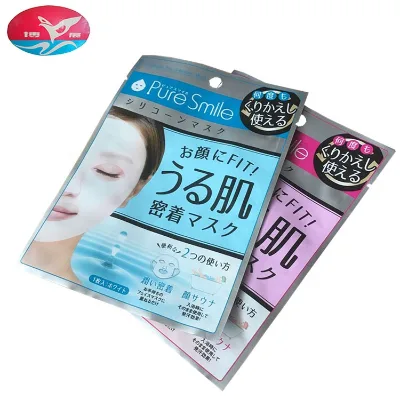
Beyond simple storage, these bags are designed for "Industrial Use" in packaging, often serving as the primary retail or bulk packaging unit. The "Bag Style" of "Stand up Pouch" or "Doypack" is particularly valuable for retail presentation, offering a professional appearance with "Beautiful printed" graphics. The "Gravure Printing" capability allows for high-resolution branding and instructional graphics, which is crucial for consumer trust and product differentiation. The "Design/Printing" options, including "Custom Design" and up to 18 colors, enable manufacturers to create distinct visual identities for their mask products.
The "Feature" of "Fragrance Keeping" is also relevant, particularly for masks that may have added scents or for preventing the absorption of external odors during transit. The "Disposable" nature of the bags aligns with the single-use lifecycle of the masks themselves, ensuring that the packaging does not become a source of waste if not properly recycled. However, the "Recyclable" feature noted in some specifications suggests that certain composite structures may be designed for easier recycling processes, which is an increasingly important consideration for environmentally conscious buyers. The "Shape" of "Plastic Bags" or "Upright Bag" ensures that the masks are presented neatly and are easy to dispense or pack into larger cartons.
Supplier Evaluation and Production Capabilities
Selecting the right supplier requires a thorough evaluation of their production capabilities, particularly regarding their ability to handle custom orders and maintain consistent quality. The "prod_model" and "Model Number" variations, such as "tianhong30" or "2021091305," indicate that suppliers often have multiple product lines or batch-specific identifiers. Buyers should verify that the supplier has the technical expertise to produce the specific "Composite Packaging Bag" structure required, including the precise lamination of Aluminum Foil with other polymers. The "Making Process" of "Composite Packaging Bag" is a specialized skill that requires advanced machinery and quality control measures.
The "Brand Name" is often listed as "OEM," indicating that the supplier is primarily a contract manufacturer capable of producing goods under the buyer's brand. This is a standard practice in the industry, but buyers must ensure that the supplier has a robust "Custom Order" acceptance process. The ability to accept "Customized" designs, sizes, and thicknesses is a key differentiator. Suppliers with a history of "Acceptable" OEM work are generally more reliable for large-scale projects. The "Place of Origin" is frequently "Guangdong, China," a major manufacturing hub known for its packaging industry, but buyers should verify the specific factory location to assess logistics and potential supply chain risks.
Quality control is paramount, and buyers should inquire about the supplier's internal testing protocols. While specific test results are not provided in the general facts, the presence of "ISO9001" certification implies a structured approach to quality management. Buyers should ask for sample testing data regarding the "Moisture Proof" and "Waterproof" claims, as well as the "Sealing & Handle" strength. The "Surface Finish" of "Film Lamination" should be inspected for uniformity and adhesion, as any defects in this layer can compromise the barrier properties. The "Single package size" and "Single gross weight" should be verified against the supplier's specifications to ensure consistency in shipping and storage.
Long-Term Procurement Considerations and Quality Assurance
Sourcing waterproof aluminum foil mask bags is not a one-time transaction but a long-term partnership that requires ongoing quality assurance and supply chain stability. The "Customized" nature of the product means that any changes in design or material specifications must be carefully managed to avoid disruptions. Buyers should establish clear communication channels with the supplier to handle "Custom Design" updates and ensure that the "Gravure Printing" plates are maintained or updated as needed. The "Delivery" time of "Received Payment 10 days" is a baseline, but buyers should negotiate buffer times for peak seasons or unexpected demand spikes.
Quality assurance should extend beyond the initial sample approval. Buyers should implement a system for regular audits of the supplier's production lines to ensure that the "Aluminum Foil" and "PE" layers are consistently applied. The "Feature" of "Wear-resisting" and "Leakproof" must be maintained throughout the production run, as any degradation in these attributes can lead to product failure. The "Standard" of "OEM" should be strictly adhered to, with the supplier providing batch-specific documentation for every shipment. The "prod_packing" method of "Carton" or "Paper Packing" should be consistent to prevent damage during transit.
Environmental sustainability is an emerging consideration for long-term procurement. While the "Recyclable" feature is mentioned, the complexity of multi-layer composites like "PET/PE" or "Aluminum Foil" laminates can pose recycling challenges. Buyers should explore the supplier's ability to offer mono-material alternatives or recyclable structures without compromising the "Waterproof" and "Moisture Proof" performance. The "Color" customization options should also be evaluated for their environmental impact, as some pigments may be more difficult to process in recycling streams.
Finally, the "MOQ" of 20,000 or 30,000 units represents a significant commitment. Buyers should assess their inventory management strategies to ensure they can absorb these volumes without incurring excessive holding costs. The "Selling Units" as "Single item" suggests that the bags are sold individually, but bulk purchasing strategies can optimize costs. The "Lead Time" and "Delivery" terms should be reviewed periodically to ensure they remain competitive and reliable. By maintaining a proactive approach to supplier evaluation and quality control, buyers can secure a stable supply of high-performance waterproof aluminum foil mask bags that meet their specific operational and regulatory needs.
Comparative Analysis of Material and Specification Options
To facilitate informed decision-making, it is helpful to compare the common material and specification options available in the market. The following table summarizes the key variations observed in the product data, highlighting the trade-offs between cost, performance, and customization.
| Feature | Option A: Standard Composite | Option B: Aluminum Foil Focus | Option C: Customized Design |
|---|---|---|---|
| Material Structure | PET/PE or BOPP+VMPET+PE | Aluminum Foil + PE | Customized (e.g., BOPP+VMPET+PE) |
| Barrier Performance | High Moisture Proof | Superior Waterproof & Oxygen Barrier | Variable based on layer selection |
| Printing Capability | Gravure Printing (18 Colors MAX) | Gravure Printing (18 Colors MAX) | Custom Design Gravure Printing |
| MOQ Requirement | 20,000 - 30,000 units | 30,000 units | 1 - 100,000 units (Flexible) |
| Sealing Method | Heat Seal | Heat Seal | Heat Seal |
| Bag Style | Stand up Flat Bottom Bag | Stand up Pouch | Upright Bag / Doypack |
| Certification | ISO9001, FDA | ISO9001, FDA, BSCI | ISO9001, FDA |
| Primary Application | Face Mask / Food Bag | Face Mask / Medical | Face Mask / Industrial Use |
This comparison illustrates that while the core functionality remains consistent, the choice of material and customization level significantly impacts the cost and performance profile. Buyers should align their selection with their specific needs for barrier protection, branding, and budget constraints. The "Customized" option offers the most flexibility but may require a higher MOQ or longer lead time. The "Aluminum Foil Focus" option provides the highest level of protection, making it ideal for premium or medical-grade mask packaging. Understanding these distinctions allows buyers to make strategic decisions that optimize both product quality and supply chain efficiency.
FAQs
Can these bags be customized for specific mask sizes?
Yes, the bags accept customized sizes and thickness based on your specific requirements. The product specifications allow for tailored dimensions to ensure a perfect fit for various face mask models while maintaining structural integrity.
What certifications do the waterproof aluminum foil mask bag suppliers hold?
Suppliers typically hold ISO9001 and FDA certifications to ensure quality and safety standards. Some vendors also provide BSCI certification, demonstrating compliance with social responsibility and labor practices within their supply chains.
How long is the delivery time for custom orders?
The standard delivery time is 10 days after receiving payment for custom orders. This timeline applies to the production and packaging of the composite bags, though complex designs may require additional coordination.
What printing options are available for these mask bags?
The bags support customized gravure printing with up to 18 colors for high-quality branding. Buyers can request custom designs to ensure beautiful printed graphics that keep the fragrance inside and resist wear.
What is the minimum order quantity for these packaging bags?
The minimum order quantity varies, with observed requirements starting at 20,000 or 30,000 units. Some suppliers may accept lower quantities, but bulk orders are common to meet the economic thresholds for custom manufacturing.
Which materials are used to make these waterproof bags?
Common materials include Aluminum Foil, BOPP, VMPET, and PE layers for a composite structure. The specific configuration, such as PET/PE or BOPP+VMPET+PE, ensures moisture proof and leakproof performance for face masks.